Tuesday, February 23, 2010

Alonso : "We’re on the right way"


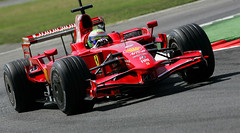
A satisfied Fernando Alonso left the "Circuito Permanente de Velocidad" after two days and almost 1,200 kilometres behind the wheel of the Ferrari single-seater. Today the Spanish driver worked on the car’s set up and simulated a Grand Prix, although he was slowed down by some red flags. In the end he drove a total of 137 laps, his fastest in a time of 1.20.436, behind Jenson Button’s 1.18.871 the Englishman had driven in the morning. Between the two drivers there were Kubica, Kobayashi, Liuzzi and Rosberg.

This gap today and over the eight days of testing don’t worry Fernando at all. "I think that someone showed his muscles today, while we didn’t,’ the Spaniard said at the end of the day. “We’ll see in Barcelona - when we’ll show up with the latest updates – where we are compared to the others. We can say that we’re on the right way. Over these two days on the dry I could drive many miles and I’m satisfied by the car’s performance and reliability. The F10 is growing very well and there’s nothing that should worry us. We worked on the long run today and the signs we got are really positive. Naturally we have to improve, because we’re not at the max, but we’re getting there. Where we have to improve? There’s always something to do, but telling you would mean I’d be like a goalie telling you about his weak point so all the strikers would hit there!"

Alonso will be back on the track next Thursday, 25 February at the "Circuit de Catalunya" near Barcelona, where the fourth and last test session before the start of the 2010 Championship will be held. Fernando will be behind the wheel of the F10 for two days, replaced by Felipe Massa on Saturday and Sunday.
Reblog this post [with Zemanta]

Fiat: eco:Drive Fleet debuts

Fiat S.p.A.Image via Wikipedia

eco:Drive Fleet makes its debut on February 26, 2010, as the latest version of eco:Drive dedicated to fleets that manages car fleets more effectively to benefit both the ecosystem and business, with great ease-of-use. This unique software makes it possible to analyse vehicle mileage and fuel consumption retrospectively, as well as suggesting sustainable driving behaviour for the future.

In detail: eco:Drive Fleet optimises the fuel consumption and the safety of company car fleets by measuring the mileage data for all vehicles (kilometres, time, fuel consumption...); it shows the data related to vehicles and drivers either individually or collectively; it automatically updates the database with management costs and the kilometre count for maintenance intervals; it evaluates driving behaviour and its impact on fuel consumption, and, above all, it offers all drivers advice on becoming an 'eco-driver'.

This new digital instrument is becoming an important gauge of quality for the Fleet Manager, who can manage the entire fleet efficiently, setting drivers goals based on the need to reduce fuel consumption and emissions. Suffice it to say, eco:Drive Fleet allows savings of up to 15 per cent on fuel costs, as well as playing an important role when it comes to wear and tear: in fact, a true 'eco-drive' ensures that all the car components are used with optimum efficiency.

Free and easy to use, eco:Drive fleet is available for all Fiat vehicles (500, 500C, Grande Punto, Punto EVO, Bravo, Croma, Qubo, Nuovo Doblò) and for Fiat Professional commercial vehicles (Grande Punto Van, Punto EVO Van, Fiorino and Doblò Cargo), equipped with the Blue&Me™ platform.

Apart from Fiat, other important companies have already demonstrated their belief in this innovative project: from Bosch and Eni (both companies contributed to developing some specific sections of the software) to Coca-Cola HBC Greece which has decided to improve its own fleet with vehicles equipped with eco:Drive.

eco:Drive Fleet therefore offers the world of the fleet all the advantages of eco:Drive, the software application (which can be downloaded free of charge from www.fiat.com/ecodrive) that runs on the Blue&Me™ interface - the most widespread on-board telematics platform in Europe, with over a million units installed - a result of the partnership between Fiat Group and Microsoft™. In detail, eco:Drive receives parameters related to fuel consumption from the engine control unit through Blue&Me™. The data recorded can be transferred onto PCs via a USB key, and processed by the appropriate software, in order to analyse motorists’ behaviour and to help them to optimise fuel consumption and emissions. Based as it is on a user-friendly, efficient and sustainable idea, eco:Drive has been an immediate hit, as borne out by the 100,000 copies of the system which have been downloaded to date since its launch (Paris Motor Show 2009). What’s more, every day, more than 32,000 drivers use it and at least 4 million journeys have been logged and analysed on the dedicated website. Taking into account the commitment of the drivers who have joined the eco:Drive Community, it is possible to estimate an overall CO2 saving of approximately 2500 tonnes.

Last year eco:Drive also won numerous international awards, including ‘Best Digital Technology’ (Guardian Innovation Award 2009), ‘Best Use of Innovative Technology’ (Clio Awards 2009), ‘European Product Innovation Award’ (Frost&Sullivan 2009), ‘Green Champion’ (International Green Apple Awards 2009) and ‘Cyber Lyons – Grand Prix’, at the Cannes Festival.

eco:Drive is evidence of Fiat's consistent attention to environmental matters, with tangible results. In fact, according to analyses carried out by the independent institution Jato Dynamics, in the last two years, Fiat has been the most environmentally-friendly brand of the top-selling 25 car brands in Europe, with an average CO2 emission level of 129 g/m compared to the market average of 146 g/km. This record is due to Fiat's great commitment to 'eco-technological' innovation, a factor which characterises all its product choices. Fiat is in fact a world leader in alternative fuels, and offers a complete range of Natural Power vehicles which run on methane, the most environmentally friendly fuel available on the market. In addition, the Euro 5 ranges of all the most recent models, such as Punto Evo and Nuovo Doblò, offer content typical of higher segments with little environmental impact and low running costs: these include the Start&Stop system, the latest generation of Multijet II diesel engines, and the revolutionary Multiair system, which slashes fuel consumption and emissions by up to 25 per cent, simultaneously enabling a power increase of up to 10 per cent.

Reblog this post [with Zemanta]

The Alfa Romeo Giulietta introduces the brand new “Compact” architecture


The Alfa Romeo Giulietta introduces an entirely new architecture - "Compact" - designed to satisfy the most demanding customers in terms of road-holding, agility and safety. It ensures both exceptional dynamic performance and high comfort levels, thanks to the refined technical solutions employed for the suspension; a new-generation steering system; a light and rigid structure created from materials such as aluminium and high-strength steels, with avant-garde manufacturing techniques. Furthermore, driving satisfaction and comfort can be adapted to the meet every customer's specific needs thanks to the Alfa DNA selector, a device that customises the vehicle's behaviour to suit different road conditions and driving styles.

So, the new Alfa Romeo is a completely new car which, drawing on the spirit of its famous predecessor, is without a doubt a sports car capable of expressing both great agility over the most demanding routes and providing comfort on everyday roads. Plus, thanks to a specific suspension calibration offered by the Sport Pack, the sportiness of the new Giulietta can be further enhanced.

The new "Compact" architecture continues Fiat Group Automobiles' architecture rationalisation strategy - preceded by the "Mini" architecture for segment A and the "Small" for segments B and L0 - and is a true "point of departure" from previous architectures due to the new content introduced, the materials used and the levels of performance achieved. Also, from the earliest design stages, the aim was to create a new architecture that would allow future Fiat Group Automobiles segment C vehicles, starting with the new Alfa Romeo Giulietta, to be ranked “best in class” in terms of handling, steering feel, performance to weight ratio, ride comfort, NVH (Noise Vibration Harshness), safety (active and passive) and climatic comfort.

First of all, the underbody represents a generational leap in terms of the materials used. The entire structure is now significantly stronger and provides better performance without any increase in weight with respect to the previous generation. All this is thanks to the ever wider use of high and ultra-high strength materials, which now make up more than 90% of the total mass of the system: some structural parts, designed to provide high strength and the ability to absorb impact with minimal deformation, have been made from hot-pressed tempered steel.

Moreover, lightweight materials have been used for several structural elements bolted to the body structure. For instance, the front beam connecting the front struts and the third load path are made from extruded aluminium. The rear bumper beam and the third load path energy absorption elements are made from Xenoy (a thermoplastic with excellent energy absorption properties in relation to weight). The third load path energy absorption elements absorb the energy of low-speed impacts with obstacles and support the bumper in impacts with pedestrians. Employing these solutions has provided a weight reduction of 8.5 kg at the front and 4 kg at the rear with respect to conventional steel structures, without compromising safety performance.

Another new feature of the underbody is its modularity, which makes it ideal for use on a family of vehicles with different wheelbases. This modularity is provided by several central floor panels and the side members and does not affect any part of the front and rear structures. This reduces outlay to a minimum and means that the system can be applied to other vehicle systems without modification.

Many of the systems and components that make up the "Compact" architecture have been thoroughly revised with respect to the previous generation, improving performance and reducing weight (-35% for both the framework of the rear seats as well as the magnesium alloy cross car beam).

Giulietta offers exceptional handling performance and comfort levels thanks above all to the new suspension system employed. The Mc Pherson front suspension in particular was revised to offer maximum rigidity under side loads, reducing the weight thanks to the use of aluminium (saving 4 kg with respect to cast-iron solutions). The rear suspension is, on the other hand, brand new: the layout is a sophisticated, cutting-edge Multilink that does not compromise the useful volume of the luggage compartment and, thanks to the aluminium wishbones, allows for a weight reduction of over 10 kg with respect to conventional Multilink systems.

In addition, the new electric power steering system ensures an excellent steering feel and is integrated with the vehicle's active safety systems. The climate control system was also specifically designed to provide the best climatic conditions in the passenger compartment, while significantly reducing over-consumption of fuel (30% less than a conventional system). Similarly, thanks to specific technical features, exceptional noise and vibrational quality values have been achieved.

In terms of passive safety, the Alfa Romeo Giulietta was produced to obtain the maximum Euro NCAP rating, as demonstrated by over fifteen thousand hours of mathematical modelling, 80 crash tests, 150 tests on a HyGe slide and more than 100 tests on components and sub-systems. In detail, the new third load path increases the energy absorption potential of the vehicle front end and reduces both inertial forces and passenger compartment intrusion, thereby ensuring optimum passenger protection at higher impact severity. Safety is guaranteed by 6 airbags (as standard on the entire range); three-point seatbelts with double pretensioners and load limiters; the collapsible pedal unit and steering column; the second-generation anti-whiplash system and the Isofix mountings.

Lastly, in terms of active safety, the new architecture of the Alfa Giulietta was designed to integrate the vehicle's different systems and exploit them to the full, thus emphasising the three set-up functions (Dynamic, Normal and All Weather) available through the Alfa DNA selector. This device, fitted as standard on the entire range, is designed to modify the operating parameters of the engine, gearbox, steering system and Q2 electronic differential, in addition to the behaviour logic of the Vehicle Dynamic Control system (VDC). Giulietta will also be introducing Pre-Fill - a new function - activated when the DNA is set to Dynamic, which uses the VDC system to provide the driver with the quickest braking response possible. These sophisticated features which improve the dynamic control of the vehicle are supported further by the Dynamic Steering Torque (DST), a function which provides the driver with a feed-back torque at the steering wheel that helps him to perform critical manoeuvres correctly, before the VDC intervenes to prevent loss of control.

Reblog this post [with Zemanta]

Quattroporte Sport GT S “Awards Edition”


The Quattroporte Sport GT S “Awards Edition”, the latest jewel in the Maserati range, makes its official debut at the prestigious Geneva Auto Show.

Six years after its birth, the car that created the luxury sport sedan segment continues to receive accolades from the general public, automobile enthusiasts and the press. Maserati has decided to celebrate its success with a superlative version, blending the elegance and sporty stylishness of the brand’s flagship, thanks to the combination of highly refined details, handcrafted finishes and features with a decidedly sporty flair.

Reblog this post [with Zemanta]

Abarth 500 Selenia track trophies for the 2010 season

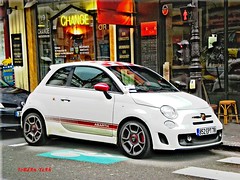
Abarth 500Image by JoRDaN-YeaH!♦♣♥♠ via Flickr

The 2010 race season calendar is packed for the Abarth, with three one-make circuit championships scheduled. A British trophy will now be added to the well-established Abarth 500 Selenia Europe Trophy andAbarth 500 Selenia Italia Trophy. All three targeting two of the Abarth philosophy’s fundamental concepts: affordability and fun.

This year’s hottest trophy news is the possibility of having two drivers in one vehicle, one in Race1 and the other in Race2. This definitely helps younger drivers and assists enormously in keeping costs down.

The Abarth 500 Selenia Europe Trophy takes pride of place, with drivers able to try their hand at the most prestigious circuits in this international context. There are five dates, each comprising two races. It will begin on 30 May, at the German circuit of Hockenheim.

The rest of the calendar continues with dates at Imola (also valid for the Italian trophy), Salzburg and Brands Hatch (also valid for the British trophy).

The 2010 edition ends on 24 October at Monza, with the participation of vehicles from both the Italian and British races, for a closing event that promises plenty of thrills.

Each date includes: a session of free trials, two 20-minute qualifiers and two races of 25 minutes plus one lap.

Registration costs for the Abarth 500 Selenia Europe Trophy are 7,500 euros and that covers all races, apparel, Abarth hospitality at racetracks (including catering), as well as shared paddock setup with the other teams. For drivers registered in both the Italian and English trophies there is a discounted fee of 6,500 euros. It is also possible to sign up for individual competitions.

There are tempting prize pools for the competitions and for the final trophy, whose winner will be awarded a road version of the Abarth 500.

The seven appointments scheduled for the UK kick-off on 4 April, at Oulton Park.

The Abarth 500 Selenia Italia Trophy includes six events of two races each, beginning at Misano on 25 April. The races are part of CSAI events and accompany the Formula ACI/CSAI-Abarth and Formula 3 competitions.

The programme for each event is identical to that of the European trophy. The registration fees have been lowered to 9,000 euros compared to last year’s 11,000, and there are special rates for drivers aged under 25, as part of a policy to allow younger drivers to be in the spotlight at reduced expense.

The outright winner of the competition will be awarded a road version of the Abarth 500, while the top-ranking Under-18 will be offered the use of a Formula ACI/CSAI-Abarth for the following season. It is actually possible to race in the competition from 15 years of age for drivers who have taken a course at the CSAI Federal School to obtain a national C licence.

Race classes are: absolute, Under 25, Under 18 and the new Gentleman class for drivers aged over 40.

The Abarth 500 Assetto Corse cars, all fitted out and prepared directly by the Abarth Officine (Workshops), are then delivered to the “Abarth Racing” tuners who take care of racetrack maintenance and support. For sports car customers the brand has created an Italian tuner network – called “Abarth Racing” – that is the privileged gateway to Abarth races.

The exclusive “Abarth Racing” network is highly specialised and currently includes six companies famous for their many years of experience in the car engine and race world: Uboldi Corse with Autoalberta by Uboldi Corse (Lomazzo, Como); Carrozzeria Campana (Modena); Forza Service (Turin); Romeo Ferraris (Opera, Milan); Trico Motor Sport (Alessandria); Zatti Sport (Parma).

Calendar of Abarth 500 Selenia Europe Trophy Events

30 May Hockenheim

04 July Imola

25 July Salzburg

05 September Brands Hatch

24 October Monza

Calendar of Abarth 500 Selenia Italian Trophy Events

25 April Misano

6 June Magione

04 July Imola

29 August Varano

10 October Mugello

24 October Monza

Calendar of Abarth 500 Selenia British Trophy Events

4 April Oulton Park

18 April Silverstone

23 May Oulton Park

27 June Snetterton

25 July Silverstone

5 September Brands Hatch

24 October Monza

Reblog this post [with Zemanta]

Tuesday, February 02, 2010

Massa fastest driver in tests in Valencia

Felipe Massa Scuderia Ferrari Marlboro Test F1...Image by lucam via Flickr

Felipe Massa was the fastest driver on the track on the first day of testing at the Cheste circuit, just outside Valencia. The Brazilian drove the fastest lap in the last minutes of the session, while he had been leading the time sheet with his lap times before. The 1.12.574 taken by Massa for his fastest lap today can’t be judged in absolute terms regarding the competitors, because this year, understanding the fuel loads in the cars, is more difficult than ever. Although it has to be said that this result is a good prelude for the F10 on the day of its debut.

"I’m happy about how it went today,” Felipe said at the end of the test session. “We worked very well and drove many kilometres without any problems. The first impression of the car is really positive: it is easier to drive compared to the F60, we can work better on the set up and last but not least there’s much more grip, which makes it much more pleasant to drive.
Naturally it’s still very early, but it’s a good start. The fastest lap? That doesn’t mean anything, but it’s always good being in the lead! I’m also satisfied with myself. It’s great being back on the track, together with all the others and to see that nothing has changed. I drove over 100 laps and I could have done another 100 from the physical and mental point of view.”

Obviously the first meeting between a driver, who has always been part of the Ferrari family and one who has taken a different road, attracted lots of interest. “I haven’t spoken to Michael yet, but we said hello when I passed him towards the end of the day. It’s very good for Formula 1 that he’s back. It’s strange seeing him with a red helmet in a grey car."

Two where today’s main technical issues: the new tyres and the cars’ behaviour with lots of petrol on board. Felipe said: "I tried the soft compound a lot today and I really liked it, but it’s really too early to draw a conclusion: we have to wait and see how it works with higher temperatures to see the wear. We also drove with different fuel loads and the car was very balanced under all conditions; that’s encouraging!"
Reblog this post [with Zemanta]

A new colour and the second-generation 1.3 Multijet engine make their debut on the Fiat 500 by Diesel

Fiat 500 (2007)Image via Wikipedia

The Fiat 500 by Diesel has chosen “Bread & Butter”, the show dedicated to youth fashion in Berlin, to preview of two important new features: “Midnight indigo” blue, a special body colour, and the 1.3 Multijet II 95 HP (Euro 5) with Start&Stop system fitted as standard, the new second-generation turbodiesel, now even more environmentally-friendly and suitable for city driving.

The result of close collaboration between Fiat and Diesel, the famous clothing brand by Renzo Rosso, the model will be limited edition and marketed worldwide. Its success is boundless and from Italy to Japan, to France, almost 6 thousand cars have already been ordered out of the 10 thousand available in total.

In Berlin, within “Bread & Butter”, the Diesel stand and the exclusive Fiat 500 will no doubt attract the attention of the visitors, just as they did at the recent Mumbai Motor Show, India. Spanning a surface area of 700 square metres in the Denim Base section, the Italian label will present its 2010 autumn/winter collections and the new “shop-in-shop/corner” concept, conceived as a genuine stage to present and convey the values of the brand and all its creativity even within multi-brand stores. Features which can also be found in the new Fiat 500 by Diesel.
As regards the new colour, the Centro Stile Fiat (Fiat Style Centre) worked once more with the creative team at Diesel to create a dark blue which recalls the denim used to make jeans. The use of a micaceous rather than a metallic shade offers at first glance the feeling of iridescent colour which varies according to the light, very similar to stone washed fabrics. And this thanks to a finer texture of paint and its ability to create an almost 3-D effect. This new blue also, like the black and green already in the range, perfectly matches the matt paint chosen for the finishes which characterise this model.

The 500 by Diesel is distinguished by some bold aesthetic features, starting with the exterior. Everything is exclusive for this version, the result of the creativity of two teams of designers: the aggressive 16" alloy wheels, the rear trim with imitation air intake where one of the most famous logos of Italian fashion is set, the yellow brake calipers (only on the 1.4 100 HP version) and the satin chrome painted features, including the mouldings which, with their bosses, revoke the atmosphere of the Diesel fashion world.

The interiors are also highly customised, thanks to the dark denim style fabric with yellow stitching, the fifth pocket with the unmistakable Diesel brand, the head of the famous Mohican on the gear lever knob and the specific satin chrome coloured dashboard.

The range of engines, in addition to the 1.3 Multijet 95 HP mentioned above, includes three Euro 5 power units (the 1.2 69 HP engine, the 1.3 Multijet 75 HP engine with DPF and the 1.4 16v 100 HP engine), each with their own different qualities, all exploited to the full in combination with 5- or 6-speed manual gearboxes (petrol engines can be combined with a 5-speed Dualogic robotised sequential gear box).
Reblog this post [with Zemanta]

Maserati chooses the Alfa Romeo MiTo for its European service network

Alfa MiToImage via Wikipedia

One hundred Alfa Romeo MiTos, produced exclusively for Maserati’s service network will soon be circulating on roads throughout Europe. For Maserati, the Alfa Romeo MiTo is the perfect “Courtesy Car” for customers who clearly appreciate Italian style and unique products.

The special MiTos will be marked out by their Maserati Ocean Blue body colour, and will be equipped with the most powerful engine in the entire MiTo range – the very lively, 170 HP, 1.4 MultiAir Turbo petrol engine.

In addition to their special body colour, the MiTos will feature another two exclusive details: a ‘Limited Edition’ plate on the air conditioning system and special aluminium kick plates bearing the words “Alfa Romeo for Maserati”.

All one hundred cars will feature be generously equipped: Frau leather seats, automatic dual zone air conditioning, a leather steering wheel with radio and telephone controls, a map-based Radionavigation unit with maps covering the whole of Europe, the Blue&Me hands-free system with USB port, and bi-xenon headlights.

The MiTo for Maserati will also stand out due to its exceptional sporting performance. It is fitted as standard with 18 inch alloy wheels, a rear spoiler, a sporty rear bumper and aluminium pedal unit. They will also be fitted as standard with Dynamic Suspension, the advanced electronic control system that varies suspension configuration actively and continuously according to road conditions and driver input, ensuring lightning-quick cornering and amazing sensitivity.

Thanks to this special initiative with Alfa Romeo, Maserati’s European service network will be able to offer its customers a very special car, completely in line with Maserati philosophy, according to which even the smallest detail is meticulously and attentively chosen.

Reblog this post [with Zemanta]

The F10's first kilometres in Valencia

Felipe Massa at Autódromo Internacional do Alg...Image via Wikipedia

The track had been opened for just one minute at Cheste, near Valencia, when Felipe Massa drove the first metres behind the wheel of the F10, the single-seater employed in the 2010 Championship by the Scuderia Ferrari Marlboro. The Brazilian drove 32 laps in the morning, the fastest in a time of 1.13.088, the best so far at 1:30pm. His first impressions are positive, although it is still too early for a serious conclusion.
Reblog this post [with Zemanta]

HARALD WESTER NEW CEO OF ALFA ROMEO AUTOMOBILES

Alfa Romeo logoImage via Wikipedia

Harald J. Wester has been appointed Chief Executive Officer of Alfa Romeo Automobiles, replacing Sergio Cravero, who will assume responsibility for Product Portfolio Planning & Product Concept of Fiat Group Automobiles.

Mr. Wester will maintain his current positions as Chief Technical Officer for Fiat Group and Fiat Group Automobiles and Chief Executive Officer of Maserati and Abarth.

The Fiat Group Chief Executive, Sergio Marchionne, stated: "The purpose of bringing the Alfa Romeo, Maserati and Abarth brands under the same leadership is to emphasize and leverage the value of the shared qualities of the three brands in terms of their sporting characteristics and performance. Harald Wester, who has demonstrated his enormous commitment on several fronts and achieved optimum results, will bring strong leadership capabilities and solid technical experience and know-how to this project. In his new role, Sergio Cravero will be well positioned to fully leverage his technical and commercial abilities."

Reblog this post [with Zemanta]